Pele Power Rides
Fat-tire e-bikes parked on a hill at dusk
Guides · Fat-tire e-bikes

Best fat-tire e-bikes for 2026

Nine fat-tire e-bikes for sand, snow, gravel and broken pavement, compared on battery, payload, weight and certification.

Affiliate disclosure: Pele Power Rides is reader-supported. Links to Himiway (via Awin) and NIU (via GoAffPro) are affiliate links, marked “Affiliate link”, and we may earn a commission at no extra cost to you. Links to other brands are plain links that pay us nothing. Commissions never decide which models we include or how we rank them. Full disclosure.

Fat-tire e-bikes run tires around four inches wide at low pressure. That wide footprint floats over sand and snow, grips loose gravel, and soaks up potholes and curbs that would jar a narrow-tire bike. Paired with a 750W motor, the result is a bike that goes almost anywhere a path does, at the cost of weight and some rolling efficiency on smooth pavement.

Fat-tire bikes are also the heaviest category we track. Every model here weighs 62 lb or more, and several pass 75 lb. That doesn’t matter on the trail, but it does on stairs, bike racks and if the battery dies far from home. Check your car rack’s weight limit before you buy.

We compared every fat-tire model in our database on the specs each brand publishes, checked Oct 15, 2026. These are spec comparisons, not hands-on tests.

Quick picks

  • Best overall fat-tire e-bike: Velotric Nomad 2 ($1,999)
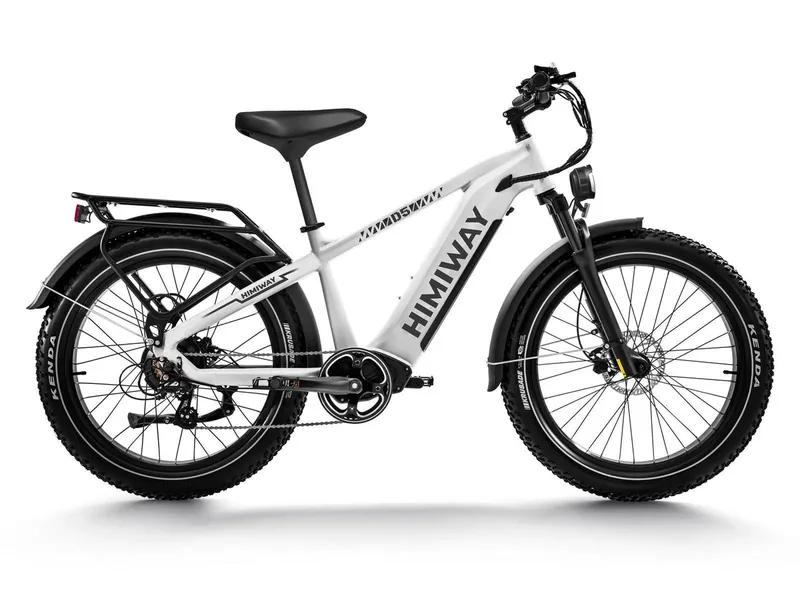
  • Biggest battery for the money: Himiway D5 (Zebra) ($1,499)
  • Best budget fat-tire e-bike: VIVI F26FUL Long Range ($649.99)
  • Best known-brand fat tire: Aventon Aventure 3 ($1,999)

Every fat-tire e-bike we track

ModelPrice*Battery$/WhMotor (nom / peak)Claimed rangeTop speedWeightPayloadUL
Velotric Nomad 2$1,999705.6Wh$2.83750W / 1,300WUp to 65 mi28 mph (20 mph default)75 lb505 lbUL 2849 & UL 2271
Himiway D5 (Zebra)$1,499960Wh$1.56750W / —60–80 mi20+ mph79 lb (with battery)400 lb—
VIVI F26FUL Long Range$649.99864Wh$0.75— / 1,000WUp to 65 mi (pedal assist)25 mph62 lb330 lbUL 2849 / UL 2271 (SGS-certified)
Aventon Aventure 3$1,999733Wh$2.73750W / 1,440WUp to 65 mi—76 lb400 lbUL 2271 (battery)
Himiway D5 2.0$2,199≈ 720Wh≈ $3.05750W / 1,300WUp to 70 mi (pedal assist)28 mph (20 mph default)92 lb400 lb—
VIVI ACE07 Commuter$899.99720Wh$1.25— / 1,500WUp to 60 mi (pedal assist)25 mph72 lb330 lbUL 2849 / UL 2271 (SGS-certified)
VIVI ACE01 Pro$989.99720Wh$1.37750W / 1,500WUp to 60 mi (pedal assist)25 mph72 lb330 lbUL 2849 / UL 2271 (SGS-certified)
Vanpowers GrandTeton Pro$3,099705.6Wh$4.39750W / 900WUp to 93 mi (test conditions stated)28 mph (assist)76.7 lb400 lbUL 2849 (bike), UL 2271 (battery)

*Prices as listed on each brand’s official US site on Oct 15, 2026. Prices change often, so check the current price before you buy. “≈” means we multiplied the stated volts and amp-hours.

Our picks in detail

Best overall fat-tire e-bike
Velotric · Fat tire

Velotric Nomad 2

The highest stated payload of any bike we track (505 lb), a 705.6Wh battery, 1,300W peak, an IPX6 frame and IPX7 battery per Velotric, and UL 2849 & UL 2271. Class 1, 2 or 3 (ships Class 2).

  • ClassClass 1, 2 or 3 (ships Class 2)
  • Motor (nominal / peak)750 W / 1,300 W peak
  • Battery705.6 Wh
  • Claimed rangeUp to 65 mi
  • Top speed28 mph (20 mph default)
  • Weight75 lb
  • Max payload505 lb
  • ULUL 2849 & UL 2271
  • Price checked Oct 15, 2026$1,999.00
  • Price per Wh$2.83
Check current price at Velotric
Specs from the official Velotric page, checked Oct 15, 2026.
Himiway D5 (Zebra)
Biggest battery for the money
Himiway · Fat tire

Himiway D5 (Zebra)

Himiway states a 960Wh battery, 60–80 mi, a 400 lb payload and a 750W motor at $1,499 on sale (listed at $2,299). The page we checked didn’t name a UL standard, so ask Himiway before buying if certification matters to you.

  • Class—
  • Motor (nominal / peak)750 W / peak —
  • Battery960 Wh
  • Claimed range60–80 mi
  • Top speed20+ mph
  • Weight79 lb (with battery)
  • Max payload400 lb
  • UL—
  • Price checked Oct 15, 2026$1,499.00 (sale)
  • Price per Wh$1.56
Affiliate link Check current price at Himiway
Specs from the official Himiway page, checked Oct 15, 2026.
Best budget fat-tire e-bike
VIVI · Fat tire

VIVI F26FUL Long Range

The lowest price per watt-hour of any e-bike we track: 864Wh for $649.99 on sale ($0.75/Wh), with UL 2849 / UL 2271 (SGS-certified) and a 62 lb weight that is light for the class. VIVI publishes 1,000W peak, not nominal, power.

  • Class—
  • Motor (nominal / peak)— / 1,000 W peak
  • Battery864 Wh
  • Claimed rangeUp to 65 mi (pedal assist)
  • Top speed25 mph
  • Weight62 lb
  • Max payload330 lb
  • ULUL 2849 / UL 2271 (SGS-certified)
  • Price checked Oct 15, 2026$649.99 (sale)
  • Price per Wh$0.75

Safety note: CPSC recall 25-391 (July 2025) covered 36V batteries on VIVI e-bikes sold Dec 2020–Nov 2023; free replacement. CPSC page

Check current price at VIVI
Specs from the official VIVI page, checked Oct 15, 2026.
Best known-brand fat tire
Aventon · Fat tire

Aventon Aventure 3

A 750W motor (1,440W in Boost), 733Wh, Up to 65 mi claimed and a 400 lb payload. Aventon states UL 2271 (battery) on the page we checked. It weighs 76 lb.

  • ClassClass 2
  • Motor (nominal / peak)750 W / 1,440 W peak
  • Battery733 Wh
  • Claimed rangeUp to 65 mi
  • Top speed—
  • Weight76 lb
  • Max payload400 lb
  • ULUL 2271 (battery)
  • Price checked Oct 15, 2026$1,999.00
  • Price per Wh$2.73
Check current price at Aventon
Specs from the official Aventon page, checked Oct 15, 2026.

How we picked

For fat-tire bikes we weighted payload and battery size more heavily than for commuters, since these bikes tend to carry heavier riders and gear over rougher ground. Certification and price per watt-hour came next. We note where a brand doesn’t state a UL standard on the product page rather than assuming either way.

What to look for in a fat-tire e-bike

Torque and nominal watts. Soft sand and steep gravel ask a lot of a motor. A 750W nominal hub motor is the norm here. Peak figures (the short burst) vary widely and aren’t always comparable between brands: VIVI, for instance, publishes only peak power.

Suspension. Fat tires provide some cushioning on their own. A suspension fork adds more on rough trails; full suspension adds comfort but also weight and maintenance. Check each product page for fork travel if you ride rough terrain.

Brakes. A 75 lb bike plus rider is a lot of mass to stop, especially downhill. Hydraulic disc brakes are strongly preferable on this class of bike.

Weight and transport. The Himiway D5 2.0 is 92 lb; the VIVI F26FUL Long Range is 62 lb. Many hitch racks are rated for around 60 lb per bike, so a heavy fat-tire bike may need a rack designed for e-bikes.

Tire pressure. Fat tires are designed to run at low pressure off-road and higher pressure on pavement. Follow the range printed on the sidewall. Running higher pressure on pavement improves range noticeably.

Where fat-tire e-bikes shine

Beaches and dunes (check local rules, since many beaches restrict motorized vehicles), snowy winter commutes, gravel roads and fire roads, and neighborhoods with rough or broken pavement. If you ride mostly on smooth pavement, a commuter with narrower tires will be lighter, quieter and go farther on the same battery. See our commuter guide.

Frequently asked questions

What is the best fat-tire e-bike?

On published specs, the Velotric Nomad 2: 505 lb payload, 705.6Wh, and UL 2849 & UL 2271, at $1,999 when we checked.

Are fat-tire e-bikes good for commuting?

They work, especially on rough roads or in snow, but they are heavier and less efficient on smooth pavement than commuter bikes. If you commute on pavement most of the year, a commuter model will usually go farther per charge.

How heavy are fat-tire e-bikes?

The ones we track range from 62 lb (VIVI F26FUL Long Range) to 92 lb (Himiway D5 2.0).

Can fat-tire e-bikes ride on sand and snow?

That is what the wide, low-pressure tires are designed for. Lower your tire pressure within the sidewall range for soft surfaces, and rinse salt and sand off the drivetrain afterward.

Related guides

How we work: every number on this page comes from the manufacturer’s official product page, checked Oct 15, 2026, and each model links to its source. Range and top speed are the brands’ own claims. We haven’t ridden or bench-tested these models, and prices change often, so check the current price on the brand’s site.