Pele Power Rides
E-scooter rider in motion on a city street
Guides · Commuter scooters

Best electric scooters for commuting

The e-scooters we track compared for daily commuting: range for the round trip, weight for the stairs, and water resistance for the rain.

Affiliate disclosure: Pele Power Rides is reader-supported. Links to Himiway (via Awin) and NIU (via GoAffPro) are affiliate links, marked “Affiliate link”, and we may earn a commission at no extra cost to you. Links to other brands are plain links that pay us nothing. Commissions never decide which models we include or how we rank them. Full disclosure.

An electric scooter is the most compact way to cover the last few miles of a commute. It folds small enough for a train, an office corner or a car trunk, needs no parking space, and costs pennies to charge. The right commuter scooter balances three things that pull against each other: range, weight and ride comfort.

Range needs to cover your round trip with margin, especially in winter. Weight decides whether carrying the scooter up stairs or onto a bus is easy or miserable. Comfort, from tire size and suspension, decides whether rough pavement rattles your teeth. Add water resistance (an IP rating) if you ride in all weather, and UL 2272 certification because you will charge it indoors.

We compared every scooter we track on the specs each brand publishes, checked Oct 15, 2026. These are spec comparisons, not hands-on tests.

Quick picks

  • Best overall commuter scooter: Apollo Explore 2.0 ($749)
  • Best for carrying: NIU KQi Air ($899)
  • Most range per dollar: Hiboy MAX Pro ($729.99)
  • Best budget commuter: NIU KQi 200P ($419)
  • Best all-weather commuter: Apollo City 2.0 ($1,399)

Commuter-class scooters we track

ModelPrice*Battery$/WhMotor (nom / peak)Claimed rangeTop speedWeightMax riderUL
Apollo Explore 2.0$749648Wh$1.16— / 1,650WUp to 37 mi25 mph60 lb265 lbUL 2271 + UL 2272
NIU KQi Air$899451.2Wh$1.99350W / 700W31 mi20 mph26.2 lb265 lbUL 2272
Hiboy MAX Pro$729.99≈ 720Wh≈ $1.01500W / 650W46.6 mi22 mph51.59 lb265 lbUL 2272
NIU KQi 200P$419365Wh$1.15350W / 700W33.6 mi20 mph43.4 lb265 lbUL 2272
Apollo City 2.0$1,399864Wh$1.62— / 1,900WUp to 40 mi32 mph72 lb265 lbUL 2271 & UL 2272
NIU KQi 300X$899608.4Wh$1.48500W / 1,000W37.3 mi20 mph (on-road)48.7 lb265 lbUL 2272
Apollo Dash$599≈ 480Wh≈ $1.25— / 1,200WUp to 25 mi20 mph43 lb220 lbUL 2272
Hiboy S2R Plus$399.99≈ 313.2Wh≈ $1.28350W / 500W22 mi19 mph31.5 lb220 lbUL 2272 (Hiboy site-wide claim)
Gotrax G3 Pro$549.99≈ 280.8Wh≈ $1.96500W / —Up to 18 mi20 mph39 lb264 lbUL 2272

*Prices as listed on each brand’s official US site on Oct 15, 2026. Prices change often, so check the current price before you buy. “≈” means we multiplied the stated volts and amp-hours.

Our picks in detail

Best overall commuter scooter
Apollo · E-scooter

Apollo Explore 2.0

648Wh, Up to 37 mi claimed, 25 mph, IP66 water resistance, a 265 lb rider limit and UL 2271 + UL 2272, at $749 on sale. It weighs 60 lb, so it suits riders who roll more than carry.

  • Motor (nominal / peak)— / 1,650 W peak
  • Battery648 Wh
  • Claimed rangeUp to 37 mi
  • Top speed25 mph
  • Weight60 lb
  • Max rider265 lb
  • IP ratingIP66
  • ULUL 2271 + UL 2272
  • Price checked Oct 15, 2026$749.00 (sale)
  • Price per Wh$1.16
Check current price at Apollo
Specs from the official Apollo page, checked Oct 15, 2026.
NIU KQi Air
Best for carrying
NIU · E-scooter

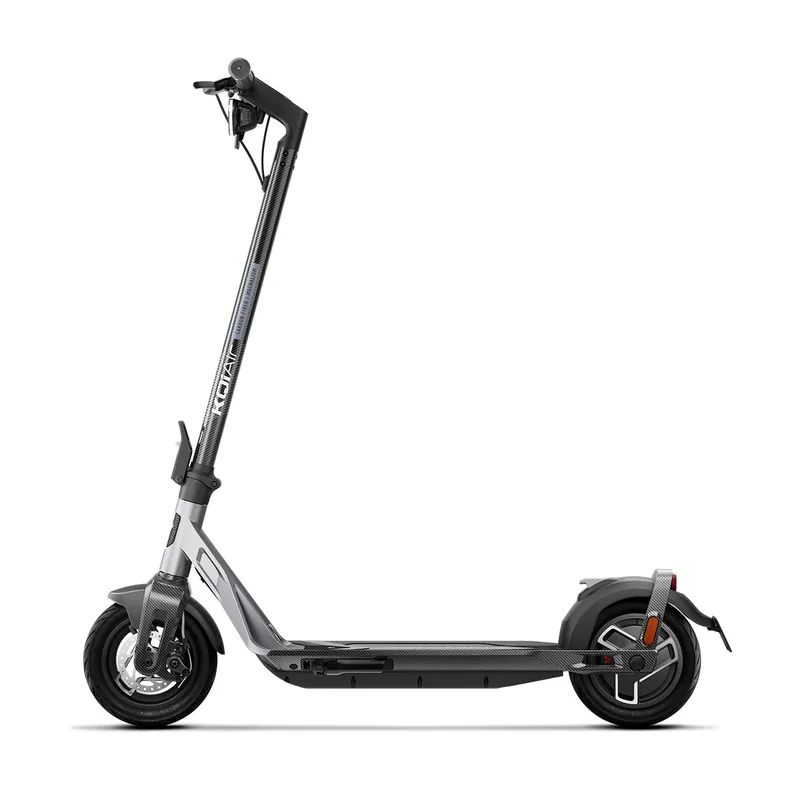
NIU KQi Air

At 26.2 lb it is the lightest scooter we track by far, with 31 mi claimed, IP55 and UL 2272, at $899 on sale.

  • Motor (nominal / peak)350 W / 700 W peak
  • Battery451.2 Wh
  • Claimed range31 mi
  • Top speed20 mph
  • Weight26.2 lb
  • Max rider265 lb
  • IP ratingIP55
  • ULUL 2272
  • Price checked Oct 15, 2026$899.00 (sale)
  • Price per Wh$1.99
Affiliate link Check current price at NIU
Specs from the official NIU page, checked Oct 15, 2026.
Most range per dollar
Hiboy · E-scooter

Hiboy MAX Pro

≈ 720Wh and 46.6 mi claimed for $729.99 on sale, with a 265 lb rider limit and UL 2272. Water resistance is a modest IPX4.

  • Motor (nominal / peak)500 W / 650 W peak
  • Battery≈ 720 Wh
  • Claimed range46.6 mi
  • Top speed22 mph
  • Weight51.59 lb
  • Max rider265 lb
  • IP ratingIPX4
  • ULUL 2272
  • Price checked Oct 15, 2026$729.99 (sale)
  • Price per Wh≈ $1.01
Check current price at Hiboy
Specs from the official Hiboy page, checked Oct 15, 2026.
NIU KQi 200P
Best budget commuter
NIU · E-scooter

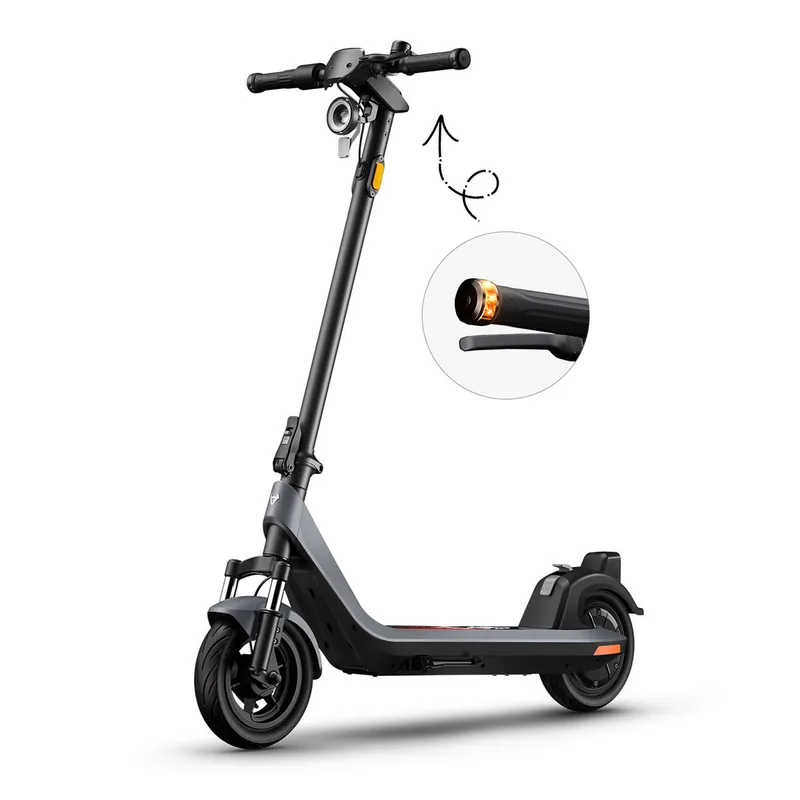
NIU KQi 200P

$419 on sale with a 365Wh battery, 33.6 mi claimed, 20 mph, IPX5 and UL 2272.

  • Motor (nominal / peak)350 W / 700 W peak
  • Battery365 Wh
  • Claimed range33.6 mi
  • Top speed20 mph
  • Weight43.4 lb
  • Max rider265 lb
  • IP ratingIPX5
  • ULUL 2272
  • Price checked Oct 15, 2026$419.00 (sale)
  • Price per Wh$1.15
Affiliate link Check current price at NIU
Specs from the official NIU page, checked Oct 15, 2026.
Best all-weather commuter
Apollo · E-scooter

Apollo City 2.0

IP66 sealing, 864Wh, Up to 40 mi claimed and 32 mph, with UL 2271 & UL 2272. It weighs 72 lb.

  • Motor (nominal / peak)— / 1,900 W peak
  • Battery864 Wh
  • Claimed rangeUp to 40 mi
  • Top speed32 mph
  • Weight72 lb
  • Max rider265 lb
  • IP ratingIP66
  • ULUL 2271 & UL 2272
  • Price checked Oct 15, 2026$1,399.00
  • Price per Wh$1.62
Check current price at Apollo
Specs from the official Apollo page, checked Oct 15, 2026.

How we picked

We focused on scooters under about 75 lb that a commuter could reasonably fold and carry, then ranked them on battery capacity, claimed range, weight, IP rating, rider limit and UL 2272 certification. The very heavy long-range models (Hiboy TITAN PRO (2026) at 103.6 lb and Apollo Phantom 2.0 (52V) at 102 lb) are covered in our long-range scooter guide.

What matters most in a commuter scooter

Real range for your round trip. Scooter range claims assume a light rider, flat ground and the slowest mode. Plan on 60–70% of the claim in good weather and less in the cold. A 5-mile each-way commute needs a scooter that realistically covers 10 miles plus margin, so look for 400Wh or more.

Weight or comfort. Light scooters like the NIU KQi Air (26.2 lb) are easy to carry but usually have less suspension. Heavier scooters like the Apollo Explore 2.0 (60 lb) ride more smoothly but are a real lift up a flight of stairs.

Water resistance. IP ratings tell you how well a scooter resists dust and water. The second digit is water: IPX4 is splash resistance, IPX5 resists low-pressure jets, and IP66 resists strong jets. No IP rating makes a scooter waterproof. See our IP ratings guide.

Tires. Larger pneumatic (air-filled) tires ride more smoothly and grip better in the wet. Solid tires never go flat but transmit more vibration. Self-sealing or tubeless tires are a good middle ground.

Certification. UL 2272 covers the electrical system of personal e-mobility devices like scooters and hoverboards. Every scooter in the commuter table above states it, though Hiboy’s claim for the S2R Plus is site-wide. (The Apollo Phantom 2.0 (52V) page we checked named only UL 2271 for its battery.)

Local rules

Scooter laws vary widely by state and city. Some cities ban scooters on sidewalks, set speed limits (often 15–20 mph), require helmets for younger riders or restrict where you can park. Some transit systems restrict lithium-battery devices on board. Check your route and transit rules before buying.

Frequently asked questions

What is the best electric scooter for commuting?

On published specs, the Apollo Explore 2.0: 648Wh, Up to 37 mi, IP66 and UL 2271 + UL 2272. If you carry it a lot, the NIU KQi Air at 26.2 lb.

How far can an electric scooter go?

The commuter scooters we track claim between Up to 18 mi (Gotrax G3 Pro) and 46.6 mi (Hiboy MAX Pro). Expect less in real riding, especially with heavier riders, hills and cold weather.

Can I ride an electric scooter in the rain?

Only if the manufacturer allows it, and with care. Higher IP ratings (IP55, IP66) resist water better, but wet roads and painted lines are slippery, and braking distances grow. Never submerge a scooter or ride through deep puddles.

Is a scooter or an e-bike better for commuting?

Scooters are smaller, lighter and easier to bring on transit. E-bikes are more stable, carry more, handle rough roads better and go farther. For short commutes with a train leg, a scooter often wins; for longer rides, an e-bike.

Related guides

How we work: every number on this page comes from the manufacturer’s official product page, checked Oct 15, 2026, and each model links to its source. Range and top speed are the brands’ own claims. We haven’t ridden or bench-tested these models, and prices change often, so check the current price on the brand’s site.